Health and Safety Policy — House Clearance Borehamwood
House Clearance Borehamwood and associated rubbish removal operations maintain a clear commitment to the health, safety and welfare of all employees, contractors, customers and members of the public who may be affected by our activities. This policy sets out the principles, responsibilities and practical measures applied across our rubbish company service area and related waste clearance services. The aim is to prevent injury, reduce risk, comply with applicable legislation and promote safe working behaviours in every property clearance and waste removal task.Scope and Objectives
This policy covers all aspects of residential and commercial clearance work, including loading, transport and disposal of household items, bulky waste, and non-hazardous materials. Our objectives are to:- Eliminate or minimise hazards associated with clearance activities;
- Ensure staff competence through training and assessment;
- Maintain safe vehicles, equipment and PPE across the service area;
- Provide clear procedures for handling potentially hazardous items;
- Continually monitor and review performance to improve safety.

Responsibilities and Accountability
The ultimate responsibility for health and safety rests with senior management. Day-to-day duties are delegated as follows: managers and supervisors must ensure risk assessments are current and enforced; team leaders must carry out site-specific checks; operatives must follow safe systems of work and report hazards. All employees must take reasonable care for their own health and that of others and cooperate with control measures. Failure to comply with this policy may result in disciplinary action.Risk Assessment and Safe Systems of Work
We undertake formal risk assessments for recurring tasks and produce Method Statements for higher-risk operations. Assessments address manual handling, slips and trips, vehicle loading, fire risks and interaction with the public. Where circumstances change, staff perform a dynamic risk assessment on arrival at each property and adjust working methods accordingly. Control measures are applied using the hierarchy of controls: eliminate, substitute, engineer, administrate and PPE.
PPE, Training and Competence
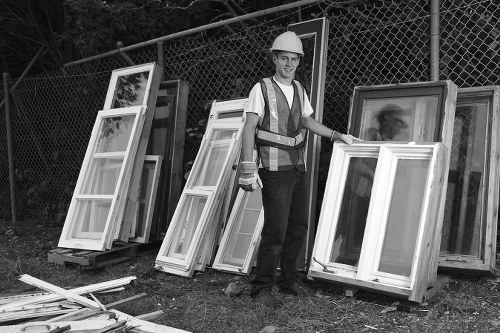
All operatives are issued with appropriate personal protective equipment, including gloves, high-visibility clothing, safety boots and eye protection. Specific tasks may require respiratory protection or additional specialist kit. Training covers manual handling techniques, use of lifting aids, safe vehicle loading, hazardous waste recognition and emergency response. Competence is validated through observation and periodic reassessment. Records of training and toolbox talks are maintained and reviewed regularly.Equipment is inspected before use and subject to routine maintenance. Lifting aids, trolleys and containment equipment are to be used where practicable to reduce manual handling. Vehicles used for removals follow secure loading procedures and drivers are trained in safe driving and load restraint methods to protect operatives and the public within our rubbish collection and waste removal service area.
Hazardous Materials and Waste Segregation
We do not knowingly accept hazardous household wastes without prior assessment and appropriate controls. Where hazardous items (such as asbestos-containing materials, certain batteries, solvents or fluorescent tubes) are present, operations are modified or specialist contractors engaged. Waste is segregated at source to maximise recycling and ensure compliant disposal. A clear chain of custody is maintained for controlled wastes in line with regulatory requirements applicable to the rubbish company service area.
Emergency Procedures and Incident Reporting
An emergency response plan is in place to address injuries, fires, vehicle incidents and unexpected hazardous discoveries. First aid kits and trained first aiders are designated on each team. All incidents, near misses and first-aid events are reported and recorded promptly. Significant incidents will be investigated to identify root causes and corrective actions. Where required, statutory notifications such as RIDDOR (or equivalent local reporting obligations) will be completed by management.